
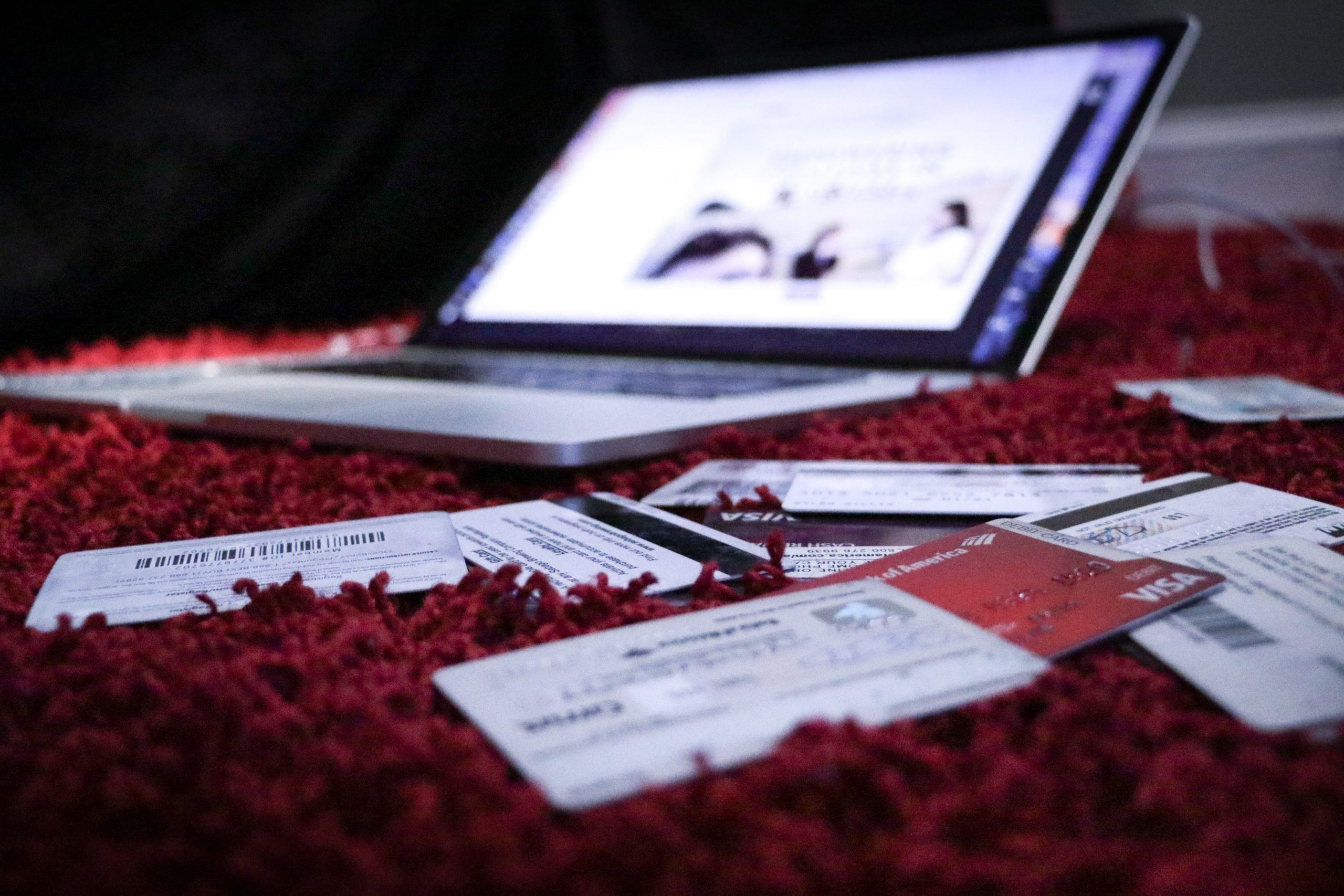
It’s easy for us to look at our credit card available balance as an emergency fund for a rainy day, but it’s not and let me explain why.
We have seen the savings rate over the last 12 months skyrocket to 33.7% in April from a low of 7.6% in January for the year. The most recent figures by the Federal Reserve Bank of St. Louis told us that we have cut that by a third and were sitting at 12.9% near the end of 2020. So if savings rates don’t remain high, it could point to a number of indicators, like paying down or off of debt, potentially the depletion of savings due to a job loss or furlough, or maybe an increase in consumer confidence causing us to spend more.
Although our savings rates may be improving somewhat, as a nation, we are not great savers.
This quality points to the little margin between what Americans bring in and what we spend. Some may consider their credit card(s), line of credit, or personal loan to be an emergency fund of sorts. Nevertheless, a credit card, in particular, may only have some of its available balance ready for you in the event of an emergency. The interest rate will only further exacerbate the crisis, and that monthly bill will still be due on those new purchases.
1. Limited Use
Some recreational entertainment and drugs, student loans, tuition, rent, mortgage, and auto loans do not allow you to utilize your credit card. Oftentimes you cannot pay debt with debt, so this limits whether you can truly use your credit card in an emergency for critical components like housing and transportation. Many cards offer a cashback option, but this might not be available as quickly as you need it.
2. Interest
As mentioned in one of the previous episodes, the interest rate on new credit cards is around 18%, while it’s 15% on established cards. Your interest is only calculated on the carried balance remaining on your card each month. Let’s say you purchase the new base-line Macbook Pro for $1,299.00. For easy math, let’s say you pay the minimum per month, and your credit card is relatively new with an APR of 18%. Over the course of 12 months, you will pay around $233.82 in interest for that laptop by leaving it on your credit card.
We tend to spend more when utilizing credit.
Experian stated that although total credit card debt reduced by $73B from 2019 to 2020, there is still an average balance of $5,315.00 per consumer. This means that annually, the average cardholder is spending $956.70 on interest alone.


As previously mentioned, it is essential to know where you are in regards to your credit card debt, who you owe that debt to, whether there is an annual fee to maintain your card, and at what APR you are paying interest.
3. Monthly Payments
When you have an emergency fund in place and pull from a savings account to cover an emergency, you then have time to build up your savings again. However, when utilizing a credit card, you are simply digging a deeper hole and further increasing the stress around the emergency you needed your savings for in the first place. When you utilize debt for the purpose of a bailout, you will still have monthly minimums to cover that debt.
Even though fear has set into the health, economic, and political environment over the past year, there has been a steady increase in mortgages, auto loans, personal loans, and student loans. However, for the first time since 2014, credit card balances decreased, according to Experian. This might be a good sign for things to come as people pay down and pay off their revolving balances.

Credit card uses: https://www.marketwatch.com/story/10-things-you-cant-buy-on-your-credit-card-2014-01-22
Credit card calculator: https://moneyfit.org/credit-card-interest-calculator


